If you’ve tried this and still can’t sign in, contact your local office or email info@richardsonmediagroup.net.

What happened to empathy?
Throughout our lives, there will be some questions that sneak up on us.
They do not arrive loudly or boastfully. They do not always come through a sermon, a news article, or a breaking news alert on our phone. Sometimes they come while scrolling through comments on social media. Sometimes they come while watching people talk past one another. Sometimes they come in the grocery store, in traffic, in your church lobby, or across a family table where the conversation has grown colder than it used to be.
And the question is this: What happened to empathy?
Not niceness. Not politeness. Not pretending everything is fine. Empathy is something deeper than manners. It is the holy work of remembering that the person in front of us is a person. A real person. With a story, a wound, a fear, a mother, a child, a burden, a history, and a soul.
Faith should make us better at this.
And yet, somewhere along the way, many of us have become very skilled at being right and far less practiced at willing to bend, or even to be wrong.
Jesus once told a story about a man beaten and left in a ditch. Religious people passed him by. Important people passed him by. People with somewhere to be and something to protect passed him by. Then came the Samaritan, the outsider, the one least expected to be the hero of the story. He saw the wounded man and was moved with compassion.
That little phrase matters: he saw him.
Empathy begins with seeing.
Not labeling. Not dismissing. Not explaining away. Not asking whether he deserved the ditch. Not wondering whether helping him would look politically complicated. Just seeing.
The Good Samaritan did not ask, “Is he one of my own?” He asked, by his actions, “What does love require of me right now?”
That is still the question. That is the nucleus of being there for someone else.
Henri Nouwen once wrote, “Compassion asks us to go where it hurts.” Friends, that is a sentence worth sitting with, because much of modern life teaches us to do the opposite. Avoid the pain. Curate the algorithm. Choose those that agree with you. Keep your distance from anything that might ask something deeper.
But faith does not let us stay at a safe distance forever. It keeps pulling us toward the wounded places. Toward the lonely. Toward the misunderstood. Toward the person we would rather reduce to a category than receive as a neighbor.
History gives us glimpses of this. In times of plague, some of the early Christians became known not because they had all the answers, but because they stayed. They cared for the sick. They tended to the vulnerable. They believed that love was not only an idea to defend, but a life to practice. Their empathy was not sentimental. It was costly.
And that may be where we struggle most today.
Empathy costs us the comfort of quick judgment. It costs us the thrill of contempt. It costs us the easy pleasure of believing everyone who disagrees with us must be foolish, wicked, or beyond their ultimate redemption.
Desmond Tutu put it beautifully when he said, “My humanity is bound up in yours.” That is not just a nice phrase. It is a spiritual diagnosis. We do not become more human by dehumanizing others. We do not become more faithful by becoming less loving. We do not honor God by treating God’s children as if they are disposable.
Dietrich Bonhoeffer, living in a world being swallowed by cruelty and power, warned that Christians must take a stronger stand “in favor of the weak.” That is not a weakness. That is exactly what we should be modeling and embodying.
So what happened to empathy?
Maybe we got tired. Maybe we got afraid. Maybe we confused outrage with courage. Maybe we let our politics, our pain, our pride, or our platforms influence us more deeply than the message of Christ did.
But here is the good news: empathy is not dead.
It can be practiced again.
It begins in small ways. Listening before answering. Asking one more question. Refusing to mock. Choosing mercy when cynicism would be easier. Remembering that every stranger is carrying something. Letting our first instinct become compassion instead of suspicion.
The world is not healed all at once. Hearts rarely are either.
But every time we choose to see one another clearly, every time we move closer to the ditch instead of passing it by, every time love interrupts our rushed hurry, something holy begins again.
Empathy can return.
And maybe, by grace and by love, it can start with us.
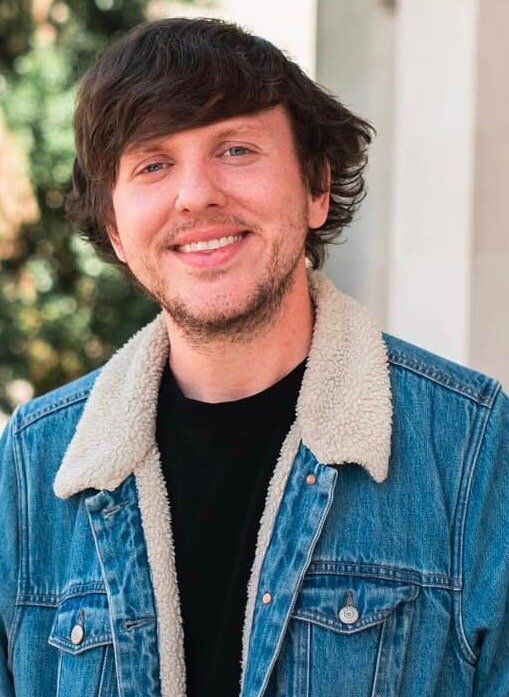
Adam Johnson is a strategy consultant and ordained minister with two decades of experience in nonprofit leadership nationwide, currently the CEO of Habitat for Humanity of Jackson TN. He holds advanced degrees in nonprofit organization from the University of Memphis. Adam lives in Jackson with his wife, Kayla, and their daughter Josephine.


