If you’ve tried this and still can’t sign in, contact your local office or email info@richardsonmediagroup.net.
FAITH: Skepticism is a holy act
Somewhere along the way, too many of us were taught that faith meant to never ask questions.
We were told, sometimes even directly, that doubt was dangerous. That skepticism was rebellion. That good people nod along, keep their heads down, and trust whatever voice sounds the most certain.
But I am not convinced that is faith.
In fact, I think skepticism can be a holy act.
Not the kind of skepticism that simply doubts everything. Not cynicism dressed up as wisdom. Not the kind of questioning that has already decided it will never believe anything contrary again. I mean the deeper kind of skepticism—the kind that pauses before believing every headline, every rumor, every preacher, every politician, every tradition, every personality that states, “Just trust me.”
Scripture never asks us to surrender our conscience. Paul writes, “Test everything; hold fast to what is good” (1 Thessalonians 5:21). First John says, “Do not believe every spirit, but test the spirits” (1 John 4:1). Even Jesus, when Thomas needed to see the wounds, did not shame him out of the room. He met him there (John 20:24-29).
That matters.
Because the world is full of people who benefit when we stop asking questions. Bad religion depends on it. Abusive leadership depends on it. Manipulative politics depends on it. Misinformation depends on it. Fear depends on it.
And we are living in a time when discernment is not optional. Pew Research reported that half of U.S. adults often get news from social media, while concerns about inaccuracy on those platforms have risen. Pew also found that Americans navigating 2024 election news were often seeing information they believed was inaccurate and struggling to distinguish fact from fiction. That is not just a media problem. It is a discipleship problem. It is a citizenship problem. It is a human problem. And in a world where AI data is becoming smarter and more robust, distinguishing fact from fiction is growing even more challenging.
When people say, “Just believe,” I want to ask, “Believe what? Believe whom? Believe toward what end?”
Because faith without discernment can become superstition. Loyalty without questioning can become idolatry. Obedience without conscience can become cruelty.
Paul Tillich, one of the great theologians of the last century, wrote that doubt is not the opposite of faith, but an element of it. Frederick Buechner said doubts are like “ants in the pants of faith”—they keep it awake and moving. What a great analogy. A faith that has never wrestled may not be strong; it may just be untested.
Jacob wrestled with God and walked away wounded, renamed, and blessed (Genesis 32). Job questioned God with brutal honesty. The Psalms are filled with lament, protest, confusion, and heartache. Even Jesus cried from the cross, “My God, my God, why have you forsaken me?” (Matthew 27:46).
So maybe holy people are not the ones who never question.
Maybe holy people are the ones brave enough to question honestly, love deeply, and keep walking toward truth.
This matters in everyday life. It matters when churches decide who belongs. It matters when public leaders make claims about poverty, housing, schools, taxes, or those who are less fortunate. It matters when someone forwards a rumor and calls it fact.
A holy skepticism asks: Is this true? Is this loving? Who benefits from me believing this? Who is harmed if I do not ask another question?
Gallup reported that confidence in organized religion was at 32% in 2024. I do not think the answer to that distrust is for religious people to become louder or more defensive. I think the answer is humility. Honesty. Repentance. Courage. A willingness to say, “We do not have to be afraid of searching for truth.”
Because truth does not need our fear to protect it.
Faith, at its best, is not blind allegiance. It is not turning off the mind God gave us. It is heart, soul, strength, and mind working together. It is asking questions not because we are faithless, but because we believe truth is worth seeking.
Skepticism can be holy when it protects the vulnerable, challenges the powerful, slows our rush to judgment, and keeps us from confusing certainty with righteousness.
So ask the question.
Check the source.
Listen again.
Pray honestly.
Test the spirit.
Hold fast to what is good.
And let go of what was never holy to begin with.
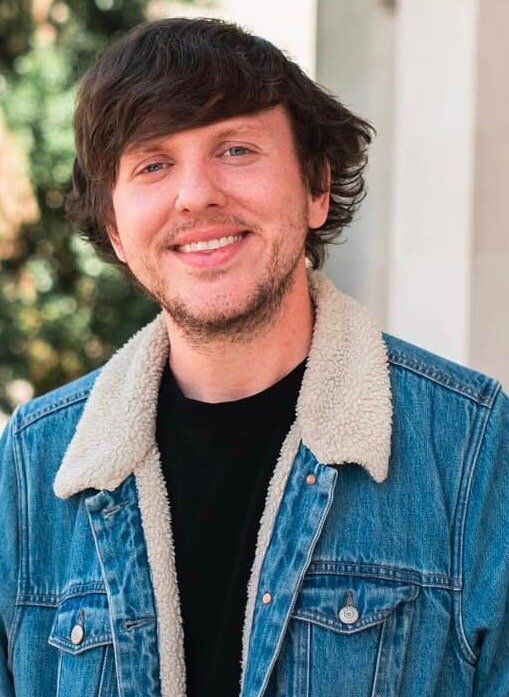
Adam Johnson is a strategy consultant and ordained minister with two decades of experience in nonprofit leadership nationwide, currently the CEO of Habitat for Humanity of Jackson TN. He holds advanced degrees in nonprofit organization from the University of Memphis. Adam lives in Jackson with his wife, Kayla, and their daughter Josephine.


