If you’ve tried this and still can’t sign in, contact your local office or email info@richardsonmediagroup.net.

OPINION: When racism shows itself, communities feel it
There are moments in our national life that force us to pause—not because they are new, but because they remind us how far we still have to go.
Recently, the President of the United States shared a social media post depicting former President Barack Obama and former First Lady Michelle Obama as apes. After significant national backlash, the post was taken down and blamed on staff. No apology followed. The message to many Americans—especially those who look like me—was unmistakable: the harm caused was not worth acknowledging.
Comparing Black people to primates is not accidental humor or political satire. It is one of the oldest and most dehumanizing racist tropes in history. And when it comes from the highest office in the land, it sends a signal far beyond one post or one platform.
What troubled me almost as much as the post itself was what happened afterward—particularly here at home.
Nationally, leaders on both sides of the political aisle spoke out. Some Republicans did so not because they agreed politically with the Obamas, but because they recognized something deeper: basic human dignity. That kind of response deserves recognition.
Locally, however, the silence was deafening.
I did not see local elected officials, candidates, or prominent civic leaders publicly acknowledge what happened. No statements condemning the imagery. No calls for unity. No reassurance to a community that was clearly hurt. Leadership is not only about managing budgets and passing ordinances; it is also about moral presence. When leaders say nothing in moments like these, the message many residents receive is that their pain is invisible—or worse, acceptable.
I grew up in a home where racism was never taught. My parents never described people by race, never warned me about “those people,” never framed the world as divided by color. I was surrounded by friends of every background and race. I spent the night at White friends’ homes and Black friends’ homes without a second thought. Difference was normal, not threatening.
I didn’t encounter racism until I was about 15 years old. When I did, I remember being deeply hurt and confused. I couldn’t understand why someone would assign something negative to me based on my skin tone. I saw beauty in every shade. I still do.
That belief shaped how I raised my children, including my biracial children. I taught them their worth. I also taught them history—real history. Scripture itself reminds us that humanity is far more connected than we often admit. The Bible traces the lineage of Jesus through Abraham, historically understood as Nubian—an African man. Revelation describes Jesus as having bronze skin and woolly hair. Whether one focuses on faith or history, the truth remains: humanity shares common roots.
To demean or degrade others—racially or otherwise—without understanding history, faith, or even basic humanity, is not strength. It is ignorance.
And ignorance has consequences.
Medical and social science research has shown that chronic exposure to racism creates sustained stress responses in the body, similar to trauma experienced in combat or other life-threatening situations. Living under constant suspicion, hostility, or dehumanization produces anxiety, exhaustion, and long-term health effects. This is not about being “too sensitive.” It is about what happens to human beings when they are repeatedly told, directly or indirectly, that they are less than.
Here in Jackson, Tennessee, this matters deeply. According to the most recent ACS data, 46.12% Whites and 44.54% Blacks live in the city of Jackson. Yet when you look at leadership across major institutions—from local government to economic development, the representation does not consistently reflect the people who live here. That gap affects trust, engagement, and outcomes.
Representation is not about exclusion. It is about stewardship. When leadership reflects the community, people feel seen. When people feel seen, they participate. When they participate, communities grow stronger.
For those of us who are people of faith, there is an even deeper responsibility.
Scripture tells us plainly: “So God created mankind in His own image” (Genesis 1:27). All of us. Not some of us. And Jesus Himself said, “By this everyone will know that you are My disciples, if you love one another” (John 13:35).
We cannot profess to be children of God while demeaning our brothers and sisters—whether by race, gender, political affiliation, or social standing. Even when harm is not intended, degradation is still degradation. That is not godly love. It is the opposite of what faith calls us to model.
Disagreement is not sin. Debate is not hatred. But dehumanization—whether spoken, posted, joked about, or silently tolerated—has no place in a society that claims moral grounding.
Jackson deserves leadership that speaks when it is uncomfortable. America deserves leaders who understand that dignity is not partisan. And all of us deserve a community where our differences are embraced not as threats, but as gifts.
I believed that as a child. I believe it now. And I believe we can still live up to it—if we choose to.
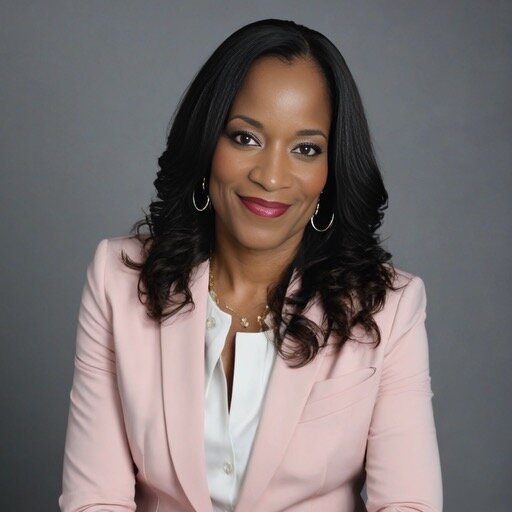
Sabrina Parker is a guest columnist. Letters to the editor and guest columns are encouraged as a venue for readers to voice their opinions on local matters or the occasional state or national matter. Letters can be e-mailed to brandon@jacksonpost.news.


