If you’ve tried this and still can’t sign in, contact your local office or email info@richardsonmediagroup.net.

FAITH: When justice becomes a spectacle
There are moments, bluntly, that make me pause and ask the question: who are we becoming?
The Department of Defense (War) has announced plans to livestream the December 3 execution of Nidal Hasan, the former Army officer convicted of killing 13 people and wounding 32 at Fort Hood in 2009. The execution is scheduled to be carried out by firing squad. The violence of that day was horrific. The families who lost loved ones deserve our compassion, our remembrance, and a justice system that takes their suffering very seriously.
But I cannot understand how broadcasting another death serves any of those things. To think that my 7-year-old child, full of curiosity and innocence could potentially have access to watching murder-on-demand, is appalling to me.
In reflecting on this scenario, it dawned on me: Jesus himself was the victim of a public execution. Crucifixion was not merely a method of killing. It was a spectacle meant to communicate power, to frighten witnesses, and to remind people who was actually in control. The Romans made suffering visible as a warning.
It is difficult, then, to imagine that the Christ whose final hours were marked by public humiliation would want us gathering around screens to witness another person's death.
In the Sermon on the Mount, Jesus challenges the familiar logic of retaliation: “You have heard that it was said, ‘An eye for an eye and a tooth for a tooth.’ But I say to you…” (Matthew 5:38–39). He then calls his followers to love their enemies and pray for those who persecute them (Matthew 5:44). Jesus did not intend to offer comfortable words. They were never meant to be.
Theologian Walter Wink, in Jesus and Nonviolence: A Third Way, argues that Jesus offers neither passive surrender nor violent retaliation, but a courageous way of resisting evil without reproducing it. That distinction matters. We can condemn an act, protect society, and hold a person accountable without making death itself a public demonstration.
Some Christians read Romans 13 as allowing our government to impose severe punishment. That conversation does certainly deserve thoughtful engagement. Yet the question before us is more immediate: even if one supports capital punishment, what spiritual or moral purpose is served by televising it?
The evidence does not provide a clear deterrence argument. A 2012 National Research Council review concluded that existing research cannot tell us whether the death penalty increases, decreases, or has no effect on homicide rates. Meanwhile, 47 people were executed in America in 2025, and at least 203 people sentenced to death have been exonerated since 1973, according to the Death Penalty Information Center. Those numbers should inspire humility about the power we entrust to any human institution.
The Catholic Church's Catechism now calls the death penalty “inadmissible,” grounding its teaching in the dignity that even a guilty person never loses. Pope Leo XIV reaffirmed that principle this month. One need not be Catholic—or even religious—to recognize the underlying concern: human dignity cannot depend on whether we admire someone's choices.
None of this diminishes the lives lost at Fort Hood. Mercy is not an excuse for murder. Accountability is not optional. But justice should be, and can be, more than revenge dressed in official language.
Jesus said, “Blessed are the peacemakers” (Matthew 5:9). He did not say blessed are those who make suffering entertaining, or those who mistake the public display of power for moral strength.
The measure of a society is not simply how it treats the innocent or the admirable. It is also what it refuses to become when confronted with the very worst of humanity.
And if we are serious about following the way of Christ, we ought to ask whether watching a person die brings us one step closer to loving our neighbor—or one step further away.
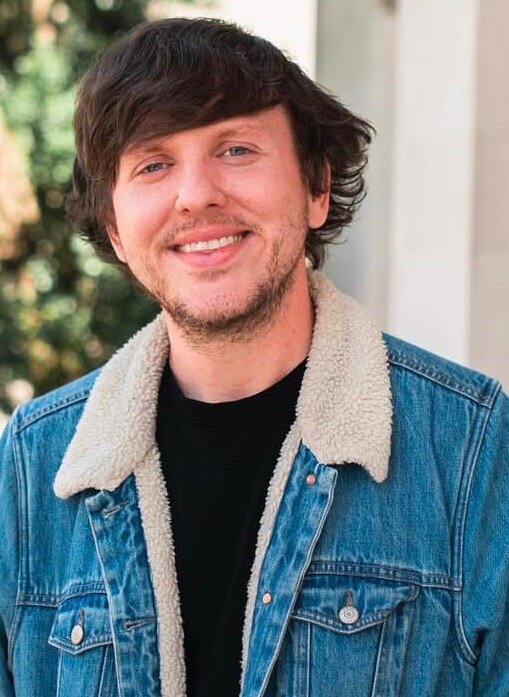
Adam Johnson is a strategy consultant and ordained minister with two decades of experience in nonprofit leadership nationwide, currently the CEO of Habitat for Humanity of Jackson TN. He holds advanced degrees in nonprofit organization from the University of Memphis. Adam lives in Jackson with his wife, Kayla, and their daughter Josephine.


